Understanding the South Korea Predicted Lineup
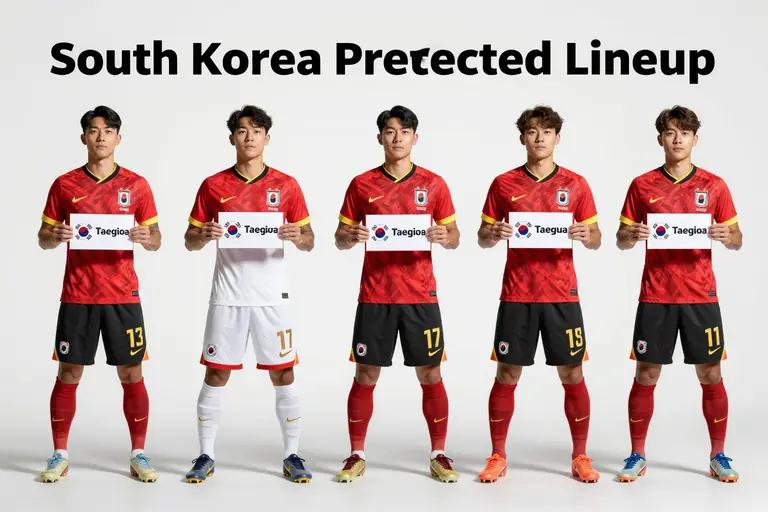
Football, often called the beautiful game, thrives on anticipation. For fans of the South Korean national team, the excitement leading up to a major tournament or crucial qualifier often revolves around one key question: What will be the South Korea predicted lineup? This isn’t just about naming eleven players; it’s about understanding the tactical philosophy, the strengths and weaknesses of the squad, and the specific challenges posed by their opponents. The Taeguk Warriors, as they are affectionately known, boast a rich history of passion, skill, and determination. Their roster is often a blend of seasoned veterans playing in top European leagues and emerging talents eager to make their mark. Predicting the South Korea predicted lineup requires a thoughtful assessment of numerous factors.
The national team’s coaching staff faces a complex puzzle each time they select a squad, let alone a starting eleven. Injuries, player form, disciplinary actions, and even the weather can all play a role in shaping the final decision. When we talk about the South Korea predicted lineup, we’re essentially trying to get inside the mind of the coach, anticipating their strategic choices. Will they opt for an attacking 4-3-3 formation, leveraging their fast wingers and prolific strikers? Or will a more cautious 4-2-3-1 or even a 3-back system be deployed to shore up the defense against a formidable opponent? These are the kinds of considerations that make speculating on the South Korea predicted lineup such an engaging exercise for fans and pundits alike.
Key Players and Their Impact on the South Korea Predicted Lineup
Any discussion about the South Korea predicted lineup inevitably begins with its star players. Son Heung-min, the captain and talisman, is almost always a guaranteed starter when fit. His pace, finishing ability, and leadership are invaluable. But beyond Son, there’s a wealth of talent that can drastically alter the complexion of the team. Hwang Hee-chan, with his powerful runs and goal-scoring threat, often features prominently in the attack. Lee Kang-in, a creative midfielder known for his exquisite passing and dribbling, adds a different dimension to the midfield. These players, among others, form the core around which the South Korea predicted lineup is built.
The defense also plays a crucial role. Kim Min-jae, often dubbed “The Monster,” is a towering presence at the back, combining strength with surprising agility. His partnership with other central defenders is vital for the team’s stability. Full-backs, such as Kim Jin-su or Lee Ki-je, provide width and support in both attack and defense, influencing the overall balance of the South Korea predicted lineup. Goalkeepers, like Kim Seung-gyu or Jo Hyeon-woo, are the last line of defense, and their experience and shot-stopping abilities are paramount. The competition for spots, especially in midfield and attack, is often fierce, leading to interesting choices for the South Korea predicted lineup.
Tactical Formations and Their Influence on the South Korea Predicted Lineup
The coach’s preferred tactical formation is perhaps the most significant factor in determining the South Korea predicted lineup. Different formations emphasize different aspects of the game. A 4-3-3, for example, typically favors a high-pressing game and relies on wide players to create chances. This formation might see Son Heung-min deployed on the left wing, with Hwang Hee-chan on the right, and a central striker leading the line. The midfield trio would then be crucial for both winning possession and distributing the ball.
Alternatively, a 4-2-3-1 formation offers more defensive solidity in midfield with two holding players, while still providing creativity through an attacking midfielder and wingers. This setup could see Lee Kang-in playing in the number 10 role, orchestrating attacks from behind the main striker. The South Korea predicted lineup under this system would prioritize control in the center of the park. Sometimes, against particularly strong attacking teams, a 3-4-3 or 5-3-2 formation might be considered. These systems aim to bolster the defense by adding an extra center-back, relying on wing-backs for width. Each formation demands specific player profiles and affects who makes the South Korea predicted lineup.
Recent Performances and Player Form for the South Korea Predicted Lineup
Player form is a dynamic element that constantly influences the South Korea predicted lineup. A player who has been consistently performing well for their club team is more likely to earn a starting spot than someone struggling for minutes or form. Coaches closely monitor their players’ performances, not just in training but also in their respective leagues. A string of good performances can elevate a fringe player into the starting eleven, while a dip in form might see a regular starter benched.
Recent international friendly matches and competitive fixtures also provide valuable insights. These games are opportunities for coaches to experiment with different combinations and formations, testing players in various roles. The lessons learned from these matches directly inform decisions about the South Korea predicted lineup for subsequent, more important games. For instance, if a particular midfield pairing shows great chemistry, it’s likely to be retained. Conversely, if a defensive setup looks vulnerable, changes will almost certainly be made to the South Korea predicted lineup.
Opponent Analysis and Strategic Adjustments for the South Korea Predicted Lineup
No South Korea predicted lineup is decided in a vacuum. The opponent’s strengths and weaknesses play a massive role in shaping the coach’s strategy. Against a team known for its strong aerial presence, the coach might prioritize taller, more physically imposing defenders. If the opponent has blistering pace on the wings, faster full-backs or a more compact midfield might be preferred to cut off supply lines. This tactical tailoring is a hallmark of successful international teams. The South Korea predicted lineup is therefore often a reactive choice, designed to neutralize the opposition’s threats while maximizing the Taeguk Warriors’ own attacking prowess.
For example, facing a team that prefers to sit deep and counter-attack might lead to a South Korea predicted lineup that emphasizes creative midfielders and players capable of unlocking a packed defense. On the other hand, playing against a team that dominates possession might prompt a lineup designed for quick transitions and counter-attacks. These strategic adjustments are what make football so fascinating and keep fans guessing about the South Korea predicted lineup right up until kick-off.
Emerging Talents and the Future South Korea Predicted Lineup
The South Korean football pipeline is constantly producing exciting new talents. Young players like Bae Jun-ho, who is making waves in England, or Jeong Woo-yeong, who offers versatility in attack, are always knocking on the door. Their inclusion in the squad, even if initially from the bench, signifies the coach’s long-term vision. These emerging talents represent the future of the South Korea predicted lineup and provide healthy competition for established players. Their energy and hunger can often inject new life into the team.
Coaches often use friendly matches or less critical qualifiers to give these young players valuable international experience. This gradual integration helps them adapt to the demands of international football and prepares them to eventually become regular starters. The balance between experienced campaigners and fresh faces is crucial for sustained success. Therefore, when discussing the South Korea predicted lineup, it’s always worth considering which young stars might be given a chance to shine.
Injuries and Suspensions: Unforeseen Changes to the South Korea Predicted Lineup
Perhaps the most frustrating and unavoidable factor influencing the South Korea predicted lineup is injuries and suspensions. A key player picking up a knock in the days leading up to a match or receiving a red card in a previous game can completely disrupt the coach’s plans. These unforeseen circumstances often force tactical reshuffles and provide opportunities for other players to step up. The depth of the squad becomes critically important in such situations.
Coaches must have contingency plans in place for various scenarios. If a star striker is injured, who steps into their shoes? If a crucial midfielder is suspended, how is their absence compensated for? These are the tough decisions that shape the final South Korea predicted lineup. Sometimes, these forced changes can even lead to unexpected positive outcomes, as a replacement player might seize their moment and perform exceptionally well. The resilience of the team in adapting to these setbacks is a testament to their character and the strength of the overall squad.
The Goalkeeper Conundrum in the South Korea Predicted Lineup
The goalkeeper position is unique in football; usually, only one can play. For the South Korea predicted lineup, the choice between their talented shot-stoppers is often a tough one. Kim Seung-gyu has long been a reliable presence, known for his experience and leadership. Jo Hyeon-woo, on the other hand, has shown incredible reflexes and match-winning saves. The decision often comes down to current form, distribution skills, and the coach’s preference for a specific style of play.
A goalkeeper who is comfortable playing out from the back might be favored if the coach wants to build attacks from deep. Conversely, a keeper known for their commanding presence in the box and ability to deal with crosses might be chosen against a team that relies heavily on set pieces. This vital decision significantly impacts the stability and confidence of the entire South Korea predicted lineup. It’s a position where consistency and communication are paramount.
Midfield Battle: Who Makes the Cut for the South Korea Predicted Lineup?
The midfield is often considered the engine room of any football team, and for the South Korea predicted lineup, this area is particularly competitive. With players like Hwang In-beom, Lee Jae-sung, and Jung Woo-young providing a mix of defensive solidity, creativity, and tireless running, the coach has a wealth of options. The balance of the midfield needs to be just right: enough defensive cover, sufficient creativity to unlock defenses, and the stamina to cover ground for 90 minutes.
Will the coach opt for a double pivot to shield the defense, or a single holding midfielder supported by two more advanced playmakers? The choice depends heavily on the opponent and the desired tempo of the game. If the team aims for high possession, technical midfielders will be prioritized. If a more direct approach is favored, box-to-box midfielders who can contribute in both attack and defense might get the nod. The South Korea predicted lineup’s midfield configuration is always a fascinating aspect to analyze.
Striking Options and Goal-Scoring Prowess in the South Korea Predicted Lineup
While Son Heung-min often plays a wide forward role, the central striker position in the South Korea predicted lineup is another area of intense competition. Hwang Ui-jo has been a consistent goal-scorer, offering a traditional number nine presence. Cho Gue-sung, after his impressive World Cup performance, has also emerged as a strong contender, known for his aerial ability and clinical finishing. Oh Hyeon-gyu provides another option with his physical presence and work rate.
The choice of striker can significantly alter the team’s attacking dynamics. A target man might be preferred if the team plans to play more direct football and utilize crosses. A more mobile striker, capable of dropping deep and linking play, might be chosen if the emphasis is on intricate passing and movement. The coach’s decision here is crucial for ensuring the South Korea predicted lineup has the necessary firepower to convert chances into goals, which is ultimately what wins matches.
Conclusion: The Ever-Evolving South Korea Predicted Lineup
Predicting the South Korea predicted lineup is an intricate dance of analysis, anticipation, and understanding the strategic nuances of international football. From star players to tactical formations, opponent analysis to player form, every element plays a part. The Taeguk Warriors are a team with immense potential, and their journey is always exciting to follow. As new talents emerge and tactical approaches evolve, the South Korea predicted lineup will continue to be a topic of passionate discussion among fans. Ultimately, the final selection will always be the coach’s prerogative, aimed at putting the best possible team on the field to achieve victory for South Korea.
Keep in mind that these predictions are fluid; football is unpredictable, and a single training session or a last-minute injury can change everything. However, by considering these various factors, we can get a pretty good sense of what the South Korea predicted lineup might look like and appreciate the complexities involved in building a winning team for South Korea.
FAQ
Q1: How often does the South Korea predicted lineup change between matches?
The South Korea predicted lineup can change quite frequently, especially if there are multiple matches in a short period (like during a tournament or international break). Coaches often rotate players to manage fatigue, prevent injuries, or adapt to different opponents. Minor tweaks are common, but major overhauls might happen if a previous strategy didn’t work or if key players become unavailable.
Q2: Does the coach prioritize experience or youth when selecting the South Korea predicted lineup?
It’s usually a balance. Experienced players provide leadership and stability, especially in high-pressure situations, and are often the core of the South Korea predicted lineup. However, coaches are also keen to integrate promising young talents to ensure the team’s future success and inject fresh energy. The specific blend often depends on the opponent and the importance of the match.
Q3: What role do international friendlies play in determining the South Korea predicted lineup for competitive games?
International friendlies are crucial for experimenting with new tactics, trying out different player combinations, and giving fringe players or young talents a chance to prove themselves. While the results of friendlies aren’t always paramount, the performances of individual players and the cohesion of the team provide valuable insights that heavily influence the South Korea predicted lineup for upcoming competitive fixtures.