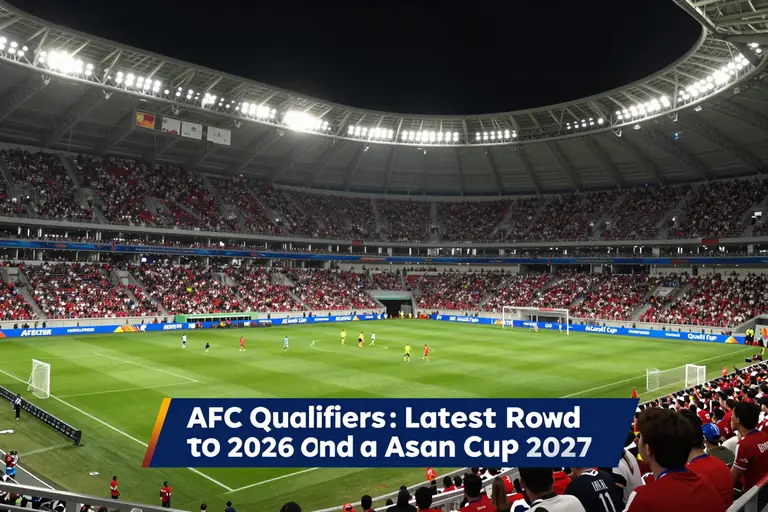

The Road to the World Cup: Unpacking AFC Qualifiers
Football fever is always high in Asia, and the journey to the FIFA World Cup is arguably the most anticipated event. As national teams battle it out across various stages, fans and pundits alike are constantly making their predictions. It’s a complex, often unpredictable, but always exciting series of matches that showcases the best of Asian football. From established powerhouses to emerging dark horses, every team dreams of representing their continent on the global stage. The sheer scale of the AFC, encompassing diverse cultures, playing styles, and geographical challenges, makes its qualification process uniquely compelling.
The qualification process itself is a marathon, not a sprint. It involves multiple rounds, each presenting its own set of challenges and opportunities. Understanding the format is key to making informed predictions. Teams are grouped, travel across vast distances, and contend with diverse playing conditions, all while striving for consistency. This intense competition often leads to nail-biting finishes and surprising upsets, making the qualifiers a popular topic of discussion. The evolution of football in Asia means that upsets are becoming more frequent, adding an extra layer of excitement and uncertainty to each qualification cycle. The stakes couldn’t be higher, with national pride, significant financial gains, and global recognition on the line for the successful nations.
Let’s break down some of the key contenders and factors that will shape the final outcomes. We’ll look at historical performance, current squad strength, tactical approaches, and even a bit of the intangible spirit that can propel a team forward. When it comes to AFC Qualifiers, there’s no crystal ball, but careful analysis can certainly paint a clearer picture. We’ll delve into the strengths and weaknesses of the top teams, examine the potential of rising forces, and consider the external elements that can swing a match or even an entire campaign. This comprehensive approach is essential for anyone looking to understand the intricate dynamics of Asian World Cup qualification.
Key Contenders and Their Chances in the AFC Qualifiers
Asia boasts a rich footballing landscape, with several nations consistently vying for World Cup berths. When we talk about these qualifiers, certain names always come to mind. Countries like Japan, South Korea, Iran, and Saudi Arabia have a strong pedigree and are often considered frontrunners. Their consistent presence in previous World Cups speaks volumes about their organizational strength, player development, and tactical prowess. These nations have built robust footballing infrastructures, invested heavily in youth development, and often have players competing at the highest levels of European football, which significantly elevates their national team’s capabilities.
Japan: The Blue Samurai’s Quest for Consistency
Japan has become a regular fixture at the World Cup, known for their disciplined play, technical ability, and tactical sophistication. Their squad often features players plying their trade in top European leagues, bringing invaluable experience and quality. For these qualifiers, Japan is almost always a safe bet to advance. Their ability to adapt to different opponents and maintain high performance levels throughout the grueling qualification process makes them formidable. The depth of their talent pool also means they can rotate players without significantly weakening their team, a crucial advantage in long campaigns. Expect them to be strong contenders in all their matches, often dictating the tempo and style of play. Their emphasis on possession-based football, quick transitions, and intelligent movement off the ball makes them a challenging opponent for any team in the region. Furthermore, their coaching staff often brings a blend of international and local expertise, ensuring a well-rounded and adaptable approach.
South Korea: The Taeguk Warriors’ Determination and Star Power
Another Asian giant, South Korea, shares a similar reputation to Japan. They are known for their relentless energy, robust physical play, and star power, often spearheaded by world-class attackers like Son Heung-min. South Korea’s chances are usually favorable, given their history and the quality of their current roster. Their passionate fan base also provides a significant boost, especially in home games, creating an electric atmosphere that can intimidate visiting teams. The Taeguk Warriors often find a way to navigate through tough groups, displaying resilience and a never-say-die attitude that has become their hallmark. Their blend of athleticism and skill makes them a tough opponent for any team in the AFC Qualifiers. They often employ a high-pressing game, aimed at disrupting opponents’ build-up play and creating turnovers in dangerous areas. The continuous emergence of young talent from their well-established K-League further strengthens their national team prospects.
Iran: Melli’s Strength, Structure, and Resilience
Iran has consistently been one of Asia’s top-ranked teams, characterized by their strong defensive organization and potent attacking threats, often relying on individual brilliance from players like Mehdi Taremi and Sardar Azmoun. Analyzing the qualifiers without considering Iran would be a mistake. They have a knack for grinding out results, particularly in difficult away fixtures, where their tactical discipline and physical prowess come to the fore. Their physical approach and tactical discipline make them a challenging opponent for any team in the region. The team’s unity and fighting spirit are often cited as key factors in their success, allowing them to overcome adversity and secure vital points in their journey. They are known for their pragmatic approach, prioritizing solidity at the back before launching quick counter-attacks, a strategy that has proven highly effective in qualification campaigns.
Saudi Arabia: The Green Falcons’ Resurgence and Home Dominance
Saudi Arabia has experienced a resurgence in recent years, demonstrating improved performances and a more structured approach to their game. Their passionate local league provides a strong foundation for the national team, with many players gaining valuable experience domestically. While their qualification chances might be slightly less certain than Japan or South Korea, they are definitely a team capable of causing upsets and securing a direct qualification spot. Their home support is legendary, often creating an intimidating atmosphere for visiting teams in Riyadh or Jeddah. The Green Falcons’ blend of technical skill and tactical discipline makes them a formidable force, especially when playing on their home turf. Their recent performance against Argentina in the last World Cup is a testament to their growing capabilities and tactical astuteness under pressure.
Emerging Nations and Dark Horses in the AFC Qualifiers
Beyond the traditional powerhouses, several other nations are making significant strides and could potentially surprise many with their performances. The gap between the top teams and the chasing pack is slowly but surely closing, leading to more competitive matches and an increased level of excitement. This growing competitiveness is a healthy sign for Asian football as a whole, indicating broader development and investment across the continent.
Australia: The Socceroos’ European Influence and Physicality
Australia, having joined the AFC, brings a different dimension to the qualifiers. Their players are often based in Europe, bringing a high level of professionalism and experience from top leagues. The Socceroos’ chances are usually positive, though they sometimes face challenges adapting to the unique conditions of Asian football, particularly the climate and travel demands. Their physical presence, aerial prowess, and direct style of play can be very effective against certain opponents, especially those who prefer a more intricate, ground-based game. They have a proven track record of qualifying for the World Cup, often through tough inter-confederation playoffs, and their determination to succeed remains undimmed in every campaign. Their ability to grind out results, even when not playing at their best, is a testament to their mental fortitude.
Qatar: The Host Nation’s Legacy and Investment in Youth
Having hosted the last World Cup, Qatar has invested heavily in its football infrastructure and player development, particularly through the Aspire Academy. While they automatically qualified as hosts previously, their performance in other AFC tournaments, such as winning the Asian Cup, shows their growing strength and tactical maturity. For future qualifiers, Qatar is a team to watch, capable of challenging the established order. Their well-funded academy system has produced a technically gifted generation of players, and their tactical organization is often praised for its discipline and fluidity. They will be looking to prove their worth beyond being just hosts in the next set of qualifiers, aiming to secure qualification on merit and solidify their position among Asia’s elite. Their naturalized players also add significant experience and quality to the squad.
Uzbekistan and UAE: The Persistent Challengers and Regional Rivals
Uzbekistan and the United Arab Emirates are two nations that consistently feature in the latter stages of the qualifiers. They often come close to securing a World Cup spot but have historically fallen short, a source of continuous frustration for their passionate fan bases. However, their continuous development means that any analysis must include them as potential disruptors. Both teams possess individual talent and are capable of strong performances, especially on their home grounds where they receive fervent support. Their ambition to reach the World Cup is palpable, and they will be pushing hard in the upcoming qualifiers, often investing in foreign coaches to bring new tactical ideas and discipline. The rivalry between these two nations also adds an extra layer of intensity to their matches, pushing both to perform at their peak.
Iraq, Syria, and Oman: The Underdogs with Potential
Beyond the established challengers, nations like Iraq, Syria, and Oman consistently show flashes of brilliance and can pose significant threats. Iraq, with its rich football history and passionate support, often performs above expectations, especially in tournaments. Syria has shown remarkable resilience and team spirit, often overcoming immense adversity to compete at a high level. Oman, known for its disciplined defense and counter-attacking prowess, can be a tough nut to crack, particularly at home. While not always front-runners, these teams have the capacity to pull off upsets and make life difficult for the favorites, potentially impacting the final standings in crucial moments. Their campaigns are often driven by national pride and a desire to prove themselves on the international stage.
Factors Influencing AFC Qualifiers
Making accurate predictions for these qualifiers isn’t just about looking at team rosters. Several other factors play a critical role in determining who ultimately makes it through. These elements can often be the difference between success and failure in such a competitive environment.
Home Advantage and Travel Fatigue Across a Vast Continent
The vast geographical expanse of Asia means teams often face extensive travel, covering thousands of kilometers across multiple time zones, leading to significant fatigue and jet lag. Playing at home, with passionate crowd support, can provide a significant boost, often described as the ’12th man’. This home advantage is a crucial element in many predictions. The climate differences across the continent also add another layer of complexity, with teams having to adapt to varying temperatures, humidity levels, and even altitude, which can severely impact player performance. Teams that can manage these logistical challenges effectively often gain a crucial edge.
Tactical Approaches, Coaching Acumen, and Adaptability
The tactical battle between coaches is often as important as the players on the field. A shrewd coach can exploit weaknesses and maximize strengths, turning the tide of a game or even an entire campaign. The evolution of tactical approaches in Asian football has made these qualifiers even more intriguing. Teams are no longer just relying on individual skill but are adopting more sophisticated strategies, including high pressing, intricate possession play, and disciplined defensive blocks. The ability of a coach to adapt their tactics to different opponents, playing conditions, and in-game situations is paramount. Coaches who can inspire their players and instill a strong team ethos often achieve greater success.
Player Form, Injuries, and Squad Depth
The form of key players and the unfortunate occurrence of injuries can significantly impact a team’s chances. A star player hitting top form can carry a team, scoring crucial goals or making game-changing saves, while a crucial injury to a pivotal player can derail an entire qualification bid. Keeping track of player fitness, current performance levels, and recent club form is vital for any comprehensive analysis of the qualifiers. The depth of a squad becomes paramount when injuries strike or when players are fatigued from club commitments, testing the resilience of a team. Teams with a strong bench and versatile players are better equipped to handle the demands of a long campaign.
Group Dynamics, Match Scheduling, and Psychological Pressure
The draw for the qualification rounds can have a huge impact. A ‘group of death’ with multiple strong teams can make the path to qualification incredibly difficult, even for strong teams, as every point becomes fiercely contested. Similarly, the scheduling of matches, especially back-to-back away games in challenging environments, can be taxing both physically and mentally. Analyzing these group dynamics, the order of fixtures, and potential psychological pressures is an important part of forming solid predictions. The sequence of games can build momentum or create significant pressure, influencing the outcome of the overall campaign. The ability to handle pressure, both from opponents and from national expectations, is a defining characteristic of successful qualifying teams.
The Excitement of the Final Stages: AFC Qualifiers
The final rounds of the AFC Qualifiers are where the tension truly builds. Teams are playing for everything, and every point becomes incredibly valuable. The playoff matches, in particular, are often dramatic affairs, with careers and dreams hanging in the balance, decided by fine margins. These moments are what make following the qualifiers so captivating, as fans witness raw emotion and incredible sporting drama unfold.
The pressure on players and coaches is immense. Mental fortitude, alongside physical prowess, becomes a deciding factor. Teams that can handle the pressure and perform consistently under intense scrutiny are often the ones that emerge victorious. This is where the true character of a team is revealed, showcasing their resilience, tactical discipline, and collective spirit, providing thrilling moments for fans and making the qualifiers even more compelling. The ability to execute under pressure, whether it’s converting a penalty, making a crucial tackle, or holding a lead, often separates the qualifiers from the hopefuls.
Ultimately, the World Cup is the pinnacle of international football, and for Asian nations, the journey through the AFC Qualifiers is a testament to their dedication and passion for the beautiful game. Every cycle brings new heroes, new stories, and new challenges, making the qualifiers a constant source of fascination. We eagerly await to see which nations will ultimately book their tickets to the next global spectacle, proving their mettle in the demanding AFC Qualifiers and representing Asia with pride on the biggest stage of all. The memories forged during these arduous campaigns often become legendary in the annals of Asian football history.
FAQ: Common Questions About AFC Qualifiers
Q1: Which Asian teams are historically most successful in World Cup qualifications?
A1: Historically, Japan, South Korea, Iran, and Saudi Arabia have been the most successful Asian teams in qualifying for the FIFA World Cup. They have the most appearances and consistently rank among the strongest contenders, owing to their established footballing infrastructure, talent development, and consistent performance on the international stage.
Q2: How many spots does Asia typically get in the FIFA World Cup?
A2: The number of direct qualification spots for Asian teams can vary slightly depending on the World Cup format and inter-confederation playoffs. With the expansion of the FIFA World Cup to 48 teams, Asia’s allocation is set to increase significantly. Typically, Asia has had around 4 to 5 direct spots, with an additional playoff spot often available. For the 2026 World Cup, the AFC will have 8 direct qualification slots, plus one inter-confederation playoff spot, making the qualifiers even more diverse and competitive.
Q3: What role does home advantage play in AFC Qualifiers?
A3: Home advantage is highly significant. Factors like passionate crowd support, familiarity with playing conditions (pitch, climate), and reduced travel fatigue can provide a considerable boost to teams playing on their home turf. Visiting teams often face challenging atmospheres, long journeys, and unfamiliar conditions, which can impact their performance. This is often a key consideration, as strong home records can be vital for securing qualification.
Q4: What are the main stages of the AFC World Cup Qualifiers?
A4: The AFC World Cup Qualifiers typically involve multiple rounds. The initial rounds feature lower-ranked teams competing in two-legged ties. The winners advance to a group stage. Subsequent rounds involve further group stages with higher-ranked teams joining, leading to a final qualification round where teams compete for direct World Cup berths. There are often also playoff matches within the AFC, and an inter-confederation playoff against a team from another confederation for a final spot. The exact format can be adjusted by FIFA and the AFC for each World Cup cycle.
Q5: How does player form in European leagues affect AFC Qualifiers?
A5: Player form in European leagues significantly impacts the qualifiers. Many top Asian national teams rely heavily on players who ply their trade in competitive European leagues. Their experience, fitness levels, tactical understanding, and exposure to high-level competition elevate the overall quality of their national teams. A player in peak form at their club can bring that momentum and confidence to the national squad, often becoming a crucial difference-maker in tight qualification matches. Conversely, injuries or a dip in form for key European-based players can be a major concern for national team coaches.