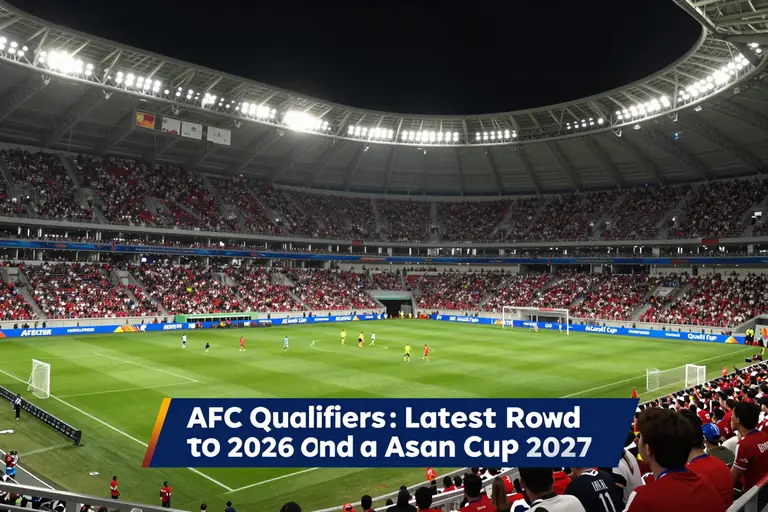

The Socceroos’ Quest for Glory
The journey for any nation to reach the FIFA World Cup is a long and arduous one, filled with highs, lows, and unexpected turns. For Australia, the Australia Road to the FIFA World Cup has historically been a captivating narrative, often defined by resilience and determination. As a football-loving nation, we eagerly follow every kick, every save, and every goal that brings the Socceroos closer to the world stage. Our coverage aims to provide you with the essential details, from match analysis to team form, helping you understand their progress.
The Asian Football Confederation (AFC) qualifiers present a unique challenge, demanding consistent performance across multiple rounds. Unlike some other confederations, the AFC path is a marathon, not a sprint. Teams must navigate group stages, often involving extensive travel and adapting to varied playing conditions. For the Socceroos, this means meticulously planning their campaigns, managing player fitness, and executing tactical strategies against diverse opponents.
Current Situation: Navigating the AFC Qualifiers
Australia’s current campaign for the FIFA World Cup is well underway, and the team has shown flashes of brilliance mixed with periods of intense pressure. They are competing in the AFC qualifiers, a multi-stage process designed to whittle down the continent’s best teams. The initial group stages are crucial for building momentum and securing a comfortable position for the next phases. Every point gained, especially away from home, can be vital for progression.
The Socceroos’ performance in these early stages often dictates the tone for their entire qualification bid. A strong start instills confidence and allows the coaching staff to experiment with tactics and give opportunities to newer players. Conversely, dropping points early can create unnecessary pressure and make the subsequent matches must-win encounters. We’ve seen the team demonstrate a good balance of attacking prowess and defensive solidity in their recent outings, which bodes well for the tougher challenges ahead.
Team Analysis: Strengths and Challenges
The Australian squad, under the guidance of its coaching staff, is a blend of experienced veterans and exciting young talent. Their primary strength often lies in their physicality, work rate, and a never-say-die attitude. Historically, Australian teams have been known for their robust defensive play and ability to grind out results, even when not at their most fluid offensively. Midfield battles are often won through sheer tenacity, allowing their wingers and strikers to exploit spaces.
However, like any team, the Socceroos face challenges. One significant aspect is managing the Australia Injury Report. Injuries to key players, especially those based in European leagues, can disrupt team cohesion and force tactical adjustments. The logistical demands of international travel for players based across different continents also add to the complexity of squad management. Finding consistent goalscorers and unlocking stubborn defenses remains a key area of focus. The team’s ability to adapt to different playing styles and weather intense pressure moments will be crucial as they progress deeper into the qualification rounds.
Tactical Overview: What to Expect from the Socceroos
Under their current management, the Socceroos typically employ a structured approach, often favoring a compact defensive shape and looking to transition quickly. We often see them utilize wide players to stretch opponents and deliver crosses into the box, leveraging the aerial ability of their forwards. Set pieces are another area where Australia can be particularly dangerous, with well-rehearsed routines often leading to scoring opportunities.
Against stronger opponents, the team might adopt a more pragmatic approach, focusing on denying space and hitting on the counter-attack. The midfield battle is always key, with central players tasked with breaking up play and dictating the tempo. The full-backs play a vital role, not just defensively but also in providing width and support in attack. The tactical flexibility of the coaching staff, and the players’ ability to execute different game plans, will be paramount as they face a variety of opponents with different strengths and weaknesses in their bid for the FIFA World Cup.
Historical Context: Past World Cup Journeys
Australia’s history in FIFA World Cup qualification is rich with memorable moments, both triumphant and heartbreaking. From the long wait between 1974 and 2006 to the dramatic play-off victories, the Socceroos have certainly earned their place among the world’s footballing nations. These past experiences provide valuable lessons, teaching the team about the mental fortitude required to succeed at this level.
The journey has often involved navigating intercontinental play-offs, adding another layer of drama and difficulty. The success of previous campaigns has built a strong foundation and a winning culture within the national team setup. Understanding this history helps us appreciate the significance of each qualification match and the immense effort that goes into every step of the Australia Road to the FIFA World Cup.
Prediction: What Lies Ahead on the Road
Predicting the exact outcome of any football qualification campaign is always challenging, given the unpredictable nature of the sport. However, based on current form and the squad’s depth, recent performances suggest that Australia is well-equipped to challenge for a spot in the upcoming FIFA World Cup. Their strong performances in the earlier rounds have put them in a favorable position.
The next stages of the qualifiers will undoubtedly be tougher, with stronger opponents and higher stakes. Key matches against traditional AFC powerhouses could prove decisive. While there are no guarantees, the team’s resilience and tactical discipline indicate a likely scenario where they will be in contention until the very end. The focus will be on maintaining consistency, avoiding crucial slip-ups, and capitalizing on home advantage when possible. We remain optimistic about their chances.
FAQ
Q: How many teams qualify from Asia for the FIFA World Cup?
A: The number of direct qualification spots for AFC teams can vary slightly depending on the World Cup cycle and any inter-confederation play-offs, but typically ranges from 4 to 5 spots.
Q: When are the next qualification matches for Australia?
A: The schedule for the next qualification matches is determined by AFC and FIFA. We recommend checking official football association websites for the most up-to-date fixtures.
Q: Who are Australia’s key players in the current squad?
A: Key players often include experienced European-based professionals and rising talents from the A-League, forming a core group that provides leadership and quality.
Q: What is Australia’s best-ever performance at a FIFA World Cup?
A: Australia’s best performance at a FIFA World Cup was reaching the Round of 16 in 2006, where they were narrowly defeated by eventual champions Italy.
Q: How does the AFC qualification format work?
A: The AFC qualification typically involves multiple rounds, starting with preliminary rounds, progressing to group stages, and culminating in final group stages and sometimes play-offs to determine the qualifiers.