
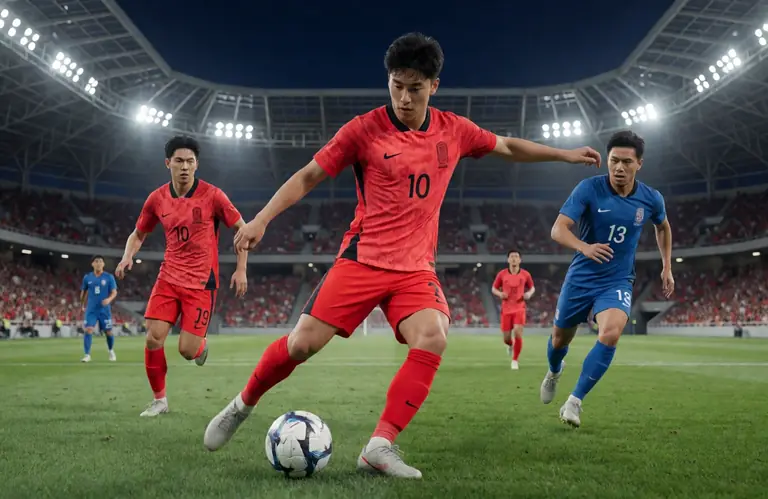
Understanding the South Korea National Football Team Selection Process: A Deep Dive
For any aspiring footballer in South Korea, receiving a call-up to the national team is not merely an achievement; it’s the pinnacle of their professional dreams. It signifies a profound recognition of their exceptional talent, relentless hard work, and unwavering dedication to the sport. However, the process behind this coveted selection is far more intricate and multi-faceted than simply identifying the most skilled individuals. National team managers and their extensive coaching staff embark on a meticulous and often exhaustive scouting mission, diligently observing and evaluating players from a diverse range of leagues, both within the vibrant domestic landscape of the K-League and across various international footballing arenas. Their ultimate objective is to meticulously assemble a cohesive and formidable squad capable of not only competing but excelling at the highest echelons of international football.
The selection criteria applied are undeniably rigorous and encompass a broad spectrum of attributes beyond mere raw ability. Factors such as a player’s current form, their seamless tactical fit within the team’s overarching strategy, their accumulated experience, and even their intrinsic leadership qualities all play an absolutely crucial role in the final decision-making process. It is not uncommon for a player to be performing exceptionally well for their respective club, yet if their individual playing style or tactical preferences do not align harmoniously with the national team’s envisioned approach, a national team call-up might not be forthcoming. This highly nuanced and holistic approach is meticulously designed to ensure the formation of a truly cohesive, balanced, and ultimately effective squad, capable of executing complex game plans and performing under immense pressure.
Key Factors Influencing a National Team Selection: Beyond the Obvious
Several critical elements weigh heavily on the minds of the national team selectors as they deliberate over potential candidates. Let’s delve into some of the most prominent and influential factors that shape a South Korea national football team selection:
- Current Form and Consistency: This is arguably the most immediate, tangible, and impactful factor. A player who is consistently performing at an exceptionally high level for their club, demonstrating a sustained period of excellence through scoring crucial goals, providing pivotal assists, or exhibiting unwavering defensive solidity, is significantly more likely to receive a call-up. Recent match performances are subjected to intense scrutiny, with selectors looking for players who are in peak condition and delivering consistently.
- Tactical Fit and Versatility: The national team operates with specific tactical systems and philosophies, which can vary depending on the opponent and tournament. Players who can seamlessly integrate into these predefined systems, possessing a deep understanding of their assigned roles and responsibilities, are highly valued. Furthermore, a versatile player who can adeptly adapt to different formations, operate effectively in multiple positions, or fulfill various tactical instructions often holds a distinct advantage, providing the manager with greater flexibility.
- International Experience and Temperament: While the constant infusion of new talent is essential for future growth, a robust core of experienced players is absolutely vital for providing stability, leadership, and composure, particularly in high-stakes international matches. Players with a significant number of previous international caps, especially those who have performed creditably in major tournaments like the FIFA World Cup or AFC Asian Cup, bring invaluable experience and a seasoned temperament to the squad. This does not preclude a young, talented player from earning a spot, but a judicious blend of youth and experience is typically preferred for a well-rounded team. Their ability to handle pressure and guide younger players is invaluable.
- Peak Physical Condition and Injury History: Football at the international level is incredibly demanding, both physically and mentally. Players must be in absolute peak physical condition to withstand the rigors of extensive international travel, intense training camps, and the unrelenting pace and physicality of high-pressure matches. Any lingering injury concerns, or a recent history of recurring injuries, can significantly impact a potential selection, as the coaching staff prioritizes player availability and robustness.
- Team Chemistry, Character, and Discipline: A harmonious and unified dressing room is undeniably crucial for achieving success in team sports. Players who consistently demonstrate exemplary sportsmanship, unwavering discipline, a positive attitude, and a strong work ethic are much more likely to be considered. Conversely, any disruptive behavior, a negative influence, or a lack of commitment, regardless of a player’s individual talent, can severely jeopardize their chances of being called up. The manager seeks individuals who will contribute positively to the team environment.
- Psychological Resilience and Big-Game Performance: International football often comes down to moments of immense pressure. Players who demonstrate strong psychological resilience, the ability to perform under the brightest spotlights, and a track record of delivering in crucial matches are highly sought after. This includes their ability to bounce back from mistakes, handle criticism, and maintain focus in adverse situations.
- Potential for Growth and Future Impact: For younger players, beyond their current abilities, the coaching staff often evaluates their potential for future growth and development. A national team selection for a promising youngster might be seen as an investment in the national team’s future, allowing them to gain invaluable experience alongside senior players and accelerate their development.
The Road to a National Team Call-Up: From Grassroots to Global Stage
The arduous yet rewarding journey for many players aspiring to a senior national team call-up typically commences within the nation’s robust and well-structured youth national team system. South Korea prides itself on a comprehensive youth development framework, featuring various age-group national teams (U-17, U-20, U-23) that serve as crucial stepping stones and provide a clear pathway for the nation’s most promising young talents. Excelling consistently at these foundational levels, whether in youth international tournaments or domestic youth leagues, is often the indispensable first step towards catching the eye of national team scouts and ultimately earning a senior team selection. Scouts rigorously monitor these youth tournaments and scrutinize individual performances within youth league competitions, looking for burgeoning stars.
For those South Korean players who have ventured abroad to ply their trade, particularly within the highly competitive and globally recognized top European leagues, their visibility is naturally higher, but so too is the intensity of the competition they face. Established stars such as Son Heung-min (Tottenham Hotspur), Hwang Hee-chan (Wolverhampton Wanderers), and Kim Min-jae (Bayern Munich), who consistently feature and perform at elite levels for prominent European clubs, are almost invariably guaranteed a national team spot whenever they are fit and available. Their sustained and exceptional performances against world-class opposition in these prestigious leagues significantly elevate their status and solidify their positions within the national squad.
Nevertheless, the K-League, South Korea’s premier domestic professional football league, remains an absolutely vital and fertile source of talent for the national team. A significant number of players initially make their indelible mark and hone their skills within the K-League before ultimately earning their inaugural national team call-up. Consistently strong and impactful performances within the domestic league, particularly for clubs that are actively competing in the prestigious AFC Champions League, can undoubtedly capture the attention and admiration of the national team coaching staff, putting them firmly on the radar for selection. The K-League serves as a crucial proving ground, showcasing players’ abilities and readiness for international football.
Anticipation and Excitement: The Profound Impact of a National Team Call-Up
When the eagerly awaited official announcement of the national team squad is made public, it inevitably generates an immense wave of excitement, discussion, and anticipation across the entire nation. Media outlets meticulously dissect every single selection, providing in-depth analysis and commentary. Fans passionately debate the merits of various choices, expressing both elation and occasional disappointment. For the players themselves, receiving the call is met with a profound surge of pride, an overwhelming sense of accomplishment, and a heightened awareness of the significant responsibility that now rests upon their shoulders. For those experiencing their first-ever call-up, it represents a truly monumental moment, often the culmination of a lifelong ambition and countless hours of dedicated effort.
The pressure exerted upon these selected players is undeniably immense. The privilege of representing one’s country on the grand international stage comes hand-in-hand with extraordinarily high expectations from the public, media, and coaching staff. Every pass, every tackle, every shot, and every decision made on the pitch is subjected to intense scrutiny and analysis. Yet, it is also an unparalleled and invaluable opportunity for these athletes to showcase their exceptional skills to a global audience, proving their worth against the world’s best, and to contribute meaningfully to their nation’s rich and evolving footballing legacy. The national team training camp itself is an incredibly intense and focused environment, meticulously designed for optimal tactical preparation, rigorous physical conditioning, and crucial team bonding exercises. A successful and impactful national team appearance can undoubtedly elevate a player’s career to unprecedented new heights, opening doors to greater recognition and opportunities.
The Indispensable Role of the Manager in National Team Selections
The national team manager is the singular and ultimate decision-maker regarding every team selection. Their personal footballing philosophy, their preferred tactical approaches, and their comprehensive understanding of the entire player pool are absolutely paramount in shaping the squad. A new manager, upon appointment, frequently brings a fresh perspective and might opt to call up players who were previously overlooked by their predecessors, or conversely, make the difficult decision to omit established names if they are deemed not to fit the new system or tactical vision. This dynamic and often fluid selection process ensures that the national team remains adaptable, responsive, and capable of evolving with the ever-changing landscape of international football.
The manager’s relationship and communication with club coaches are also of significant importance. While club commitments are always a primary consideration for players, effective and respectful communication between national team and club staff ensures that players are managed prudently, both in terms of their playing time and their recovery, thereby significantly reducing the risk of burnout, overtraining, or debilitating injuries. A well-managed and considerate selection process takes into account the player’s overall well-being, acknowledging the demands placed upon them by both club and country.
Looking Ahead: Future Trends and Evolving Dynamics in South Korea National Team Decisions
As the global game of football continues its rapid evolution, so too do the considerations and methodologies employed for national team selections. There is a discernible and increasing emphasis on the integration of cutting-edge data analytics and advanced sports science into the selection process. Comprehensive performance data, sophisticated GPS tracking metrics, and detailed physiological measurements are increasingly utilized to objectively evaluate players, meticulously monitor their fitness levels, and assess their overall physical output. This increasingly scientific and data-driven approach aids in making more informed, precise, and evidence-based decisions about who ultimately receives a coveted national team call-up, moving beyond purely subjective assessments.
Furthermore, the increasingly globalized nature of modern football means that a greater number of talented South Korean youngsters are venturing abroad to pursue professional careers at progressively younger ages. This invaluable exposure to diverse football cultures, different tactical approaches, and higher levels of competition in established European and international leagues is highly likely to profoundly influence future national team selections. This trend could potentially lead to the formation of a more diverse, tactically astute, and internationally seasoned national squad, benefiting from a wider array of experiences. Concurrently, the continuous development, professionalization, and rising standards of the K-League ensure a steady and robust stream of high-quality domestic talent remains consistently in contention for a national team spot, providing a strong foundation of homegrown players.
The ultimate and overarching goal of every meticulously planned selection is to assemble the strongest possible team, a unified force capable of competing with distinction and achieving success in prestigious international tournaments such as the FIFA World Cup and the AFC Asian Cup. It represents a continuous, cyclical process of intensive scouting, rigorous evaluation, strategic selection, and relentless pursuit of peak performance, all fueled by an unwavering national passion for football and an ardent desire for national glory. Each and every national team call-up serves as a powerful testament to the nation’s rich and enduring footballing heritage, its commitment to player development, and its exciting prospects for a bright future on the global stage.
Fans across South Korea eagerly anticipate each official announcement, fervently hoping to see their favorite players proudly don the iconic national colors. The unparalleled excitement, the spirited debates, and the collective dreams associated with a national team selection are an intrinsic and deeply cherished part of the country’s vibrant football culture. It is far more than just a mere list of names; it is a profound reflection of the nation’s aspirations, its resilience, and its collective identity on the global sporting arena. The arduous journey of each individual player, from their humble beginnings on local pitches to potentially earning a career-defining national team call-up, is a compelling narrative of perseverance, unwavering dedication, and exceptional talent that resonates deeply with the populace.
Ultimately, the final and weighty decision for a national team selection rests squarely with the national team coaching staff, who bear the significant responsibility of meticulously selecting individuals who can most effectively and honorably represent the nation’s footballing ambitions. Their choices are invariably made with the team’s collective success as the paramount consideration, meticulously balancing the invaluable experience of seasoned veterans with the fresh energy and potential of new talent, and carefully aligning tactical necessities with individual brilliance. The palpable anticipation and widespread national interest surrounding every national team announcement is a clear and undeniable indication of how profoundly and deeply football runs in the veins of the Korean people, serving as a unifying force and a source of immense national pride.
The meticulous planning extends beyond just the initial selection. The coaching staff also considers the logistics of bringing players from different clubs and countries together, ensuring smooth transitions and minimal disruption to their routines. They monitor player welfare closely, employing sports psychologists and medical professionals to maintain physical and mental health throughout demanding international windows. This holistic approach underscores the professionalism and dedication invested in every aspect of the national team’s preparation, all stemming from that initial, pivotal national team call-up.
FAQ
Q: How often does the South Korea national team selection happen?
A: The national team selection typically occurs periodically throughout the year, primarily before designated international match windows. These windows are established by FIFA and allow national teams to gather for friendly matches, crucial World Cup qualifiers, or major continental tournaments like the AFC Asian Cup. The exact frequency therefore depends directly on the international football calendar and the schedule of competitive fixtures.
Q: Can a player decline a national team call-up?
A: While exceedingly rare and generally discouraged, a player can technically decline a national team call-up. The most common legitimate reasons for doing so include documented injuries that prevent participation, pressing personal or family reasons, or in some very specific instances, unavoidable club commitments. However, for mandatory international windows (such as World Cup qualifiers), clubs are typically obligated to release players, making refusal due to club commitments less common and often subject to sanctions.
Q: What is the main goal of each national team selection?
A: The primary and overarching goal of every national team selection is to meticulously select the most suitable, in-form, and tactically appropriate players available at that specific time to represent the national team. This selection is always made with the express aim of achieving competitive success, delivering strong performances in upcoming matches or tournaments, and ultimately bringing honor and pride to the nation on the international football stage.