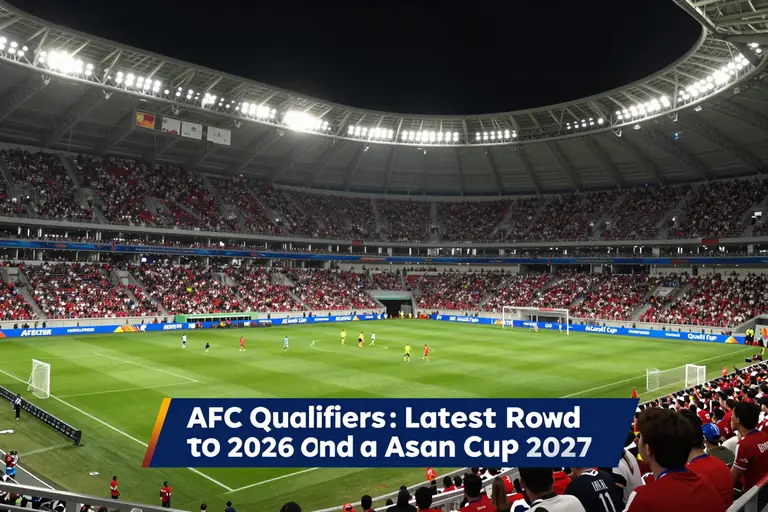

The United Arab Emirates national football team is currently navigating the challenging path of the AFC qualifiers, aiming for a spot in the upcoming FIFA World Cup. Their journey involves overcoming strong regional rivals and maintaining consistent performance across multiple stages. We’re here to break down where the team stands, what challenges they face, and what their prospects look like as they push for football’s biggest stage.
Current Standing in the Qualifiers
The UAE’s campaign for World Cup qualification is well underway, and they’ve shown flashes of brilliance mixed with periods of struggle. In the current phase, the team has been working to secure a top spot in their group, which is crucial for advancing. Their recent matches have been a test of their resilience and tactical discipline, often playing against teams known for their defensive solidity or attacking prowess. Each point gained or lost at this stage can significantly impact their chances, making every game a must-watch event for fans.
The competition in the AFC region is always fierce. Teams from East Asia, Southeast Asia, and West Asia all bring different styles and strengths to the table. For the UAE, adapting to these varying approaches is key. We’ve seen them excel when they manage to control the midfield and utilize their wingers effectively, but they can sometimes struggle against teams that press high and disrupt their build-up play. Consistency in performance, especially in away games, will be vital for their progression.
Recent Match Results and Form
Analyzing the UAE’s recent results gives us a clearer picture of their current form. They’ve had a mixed bag of outcomes, securing important wins against lower-ranked teams but also facing tough draws or narrow losses against stronger opponents. For instance, a recent victory at home boosted their morale and standings, demonstrating their ability to perform under pressure in front of their fans. However, an away draw in a match they were expected to win highlighted areas where improvements are still needed, particularly in converting chances.
Looking at their last five matches, the team has managed to pick up valuable points, but there’s a clear pattern of needing to be more clinical in front of goal. Their defensive organization has generally been solid, but lapses in concentration have cost them in crucial moments. The coaching staff is likely focusing on tightening up these areas while also encouraging more attacking fluidity. The ability to score goals consistently, especially against well-organized defenses, remains a critical factor for their success in the remaining qualification rounds. You can stay updated with all the developments by checking out the AFC Qualifiers Latest News.
Key Players to Watch
The UAE squad boasts several talented players who are instrumental to their World Cup aspirations. Leading the line, the experienced striker often provides the crucial goals, showing composure in the box. His ability to hold up play and bring others into the game is also invaluable. In midfield, a dynamic playmaker dictates the tempo, distributing passes and creating opportunities for the forwards. His vision and passing range are central to the team’s attacking strategy.
Defensively, a seasoned center-back anchors the backline, providing leadership and crucial interceptions. His aerial prowess and ability to read the game are essential in warding off opposition attacks. Meanwhile, a promising young winger offers pace and trickery on the flanks, capable of unlocking stubborn defenses with his dribbling skills and crosses. The performances of these key individuals, along with strong team cohesion, will largely determine how far the UAE can go in these qualifiers. Injuries to any of these players could significantly impact the team’s balance and performance, making squad depth an important consideration.
Tactical Approach and Coaching Influence
Under their current coach, the UAE national team has adopted a tactical approach that often emphasizes controlled possession and patient build-up play. They typically look to dominate the midfield, using short passes to draw opponents out before exploiting spaces with quick transitions to the wings or through the center. This style aims to maintain defensive solidity while creating clear-cut chances. However, against teams that press high and disrupt their rhythm, they sometimes struggle to impose their game.
The coach has also shown a willingness to adapt formations based on the opponent, sometimes opting for a more defensive setup in away games or against stronger sides. This tactical flexibility is a strength, but it requires players to be versatile and understand different roles. The influence of the coaching staff extends beyond just match tactics; they are also focused on developing younger talent and integrating them into the senior squad, ensuring a pipeline of players for future campaigns. Their ability to motivate the team and make effective in-game adjustments will be critical as the qualifiers progress.
The Road Ahead: Challenges and Opportunities
The path to the FIFA World Cup is fraught with challenges for the UAE. They will face increasingly difficult opponents in the later stages of qualification, including some of Asia’s footballing giants. These matches will demand peak physical fitness, tactical discipline, and mental fortitude. Overcoming travel fatigue, adapting to different climates, and performing under immense pressure are all part of the journey.
However, these challenges also present significant opportunities. Every match is a chance to prove their capabilities, improve their FIFA ranking, and inspire a nation. A successful qualification campaign would not only boost football in the UAE but also provide invaluable experience for the players and coaching staff. The support of the fans, both at home and abroad, will play a crucial role in pushing the team forward. As they navigate the remaining fixtures, every game will be a final, with the dream of reaching the World Cup fueling their ambition.
Historical Context in World Cup Qualifiers
The UAE has a history of competing in World Cup qualifiers, with their most notable achievement being their qualification for the 1990 FIFA World Cup in Italy. That historic appearance remains a benchmark for subsequent generations of players and fans. Since then, they have consistently been contenders in the AFC qualification rounds, often reaching the final stages but falling short of securing a spot in the main tournament.
This historical context adds an extra layer of motivation for the current squad. They are not just playing for themselves, but also for the legacy of UAE football and the hopes of their nation. The experiences from past campaigns, both successes and near misses, provide valuable lessons for the team. Understanding what it takes to navigate the pressures of qualification, especially in crucial moments, can be drawn from these historical efforts. The current team aims to build on this legacy and write a new chapter in the country’s footballing history by securing a place at the next World Cup.
FAQ
What stage are the UAE currently in for World Cup qualification?
The UAE national team is currently competing in the second round of the AFC World Cup qualifiers, aiming to secure a top-two finish in their group to advance to the next stage.
Who are the main rivals for the UAE in their qualification group?
The main rivals for the UAE in their current qualification group typically include other strong teams from the AFC region, often those with established footballing traditions and competitive squads, making every match a significant challenge.
What needs to improve for the UAE to qualify for the World Cup?
For the UAE to qualify, they will likely need to improve their goal-scoring consistency, maintain defensive solidity throughout entire matches, and demonstrate tactical flexibility to overcome various opponents, especially in away fixtures.